Dollarwise

When Do I Need to Replace My Heating Oil Tank Filter?

Your heating oil filter doesn’t get much attention, but it plays a critical role in keeping your furnace or boiler running reliably. A clogged or overdue filter can restrict oil flow, trigger system shutdowns, and lead to expensive mid-winter service calls.

If you’re wondering how often to replace your heating oil filter, what warning signs to watch for, or whether this is something you can handle yourself, this guide breaks it down clearly. Proper filter maintenance is one of the simplest ways to prevent heating failures and protect your equipment.

What Is a Heating Oil Filter?

A heating oil filter is a small but essential component located between your oil tank and your burner, typically housed in a metal canister along the fuel line. Its job is to remove dirt, sediment, rust particles, and moisture from the oil before it reaches the burner.

By filtering out these contaminants, the oil filter protects the fuel nozzle from clogging, keeps the fuel pump working properly, and helps prevent system lockouts or damage. Without a clean filter, even high-quality heating oil can cause performance issues once debris builds up.

How Heating Oil Filters Work

As heating oil flows from the tank toward the burner, it passes through a filter cartridge inside the canister. The filter media traps contaminants while allowing clean oil to continue through the system.

Over time, debris and moisture accumulate in the filter. As the cartridge becomes saturated, oil flow becomes restricted. If the filter isn’t replaced, this restriction can prevent the burner from receiving enough fuel, leading to poor performance or complete system shutdown.

The Standard Replacement Schedule: At Least Once Per Year

Industry best practice is to replace your heating oil filter at least once per year, even if you aren’t experiencing problems.

The best time to change your filter is in the fall (September or October), before the heating season begins. Starting winter with a clean filter ensures your system can handle peak demand during the coldest months and reduces the risk of emergency breakdowns.

Many homeowners coordinate filter replacement with their annual furnace or boiler tune-up, making it part of a regular fall maintenance checklist.

Factors That May Require More Frequent Replacement

While annual replacement is the minimum recommendation, some homes need filter changes more often.

While annual replacement is the minimum recommendation, some homes may need filter changes more often due to the following factors:

  • Older oil tanks: Aging tanks often produce more sediment and sludge, which can clog filters faster. 
  • High fuel usage: Homes that burn more oil overall (e.g., large homes or homes in Northeastern states that experience very cold winters) send more debris through the filter.
  • Biodiesel or Bioheat® use: These blends can loosen existing buildup inside the tank, leading to quicker filter saturation.
  • Wrong size tank for home: Larger or undersized tanks can impact how often debris moves through your system and impact filter life. (See What Home Heating Oil Tank Size You Need for guidance.)
  • Outdoor tank placement: Exposure to temperature changes increases condensation and moisture, raising the risk of water contamination.
  • Rusty or deteriorating tanks: Corrosion can shed particles that overwhelm the filter.

In any of these higher-risk situations, replacing the filter twice per year—once in the fall and once mid-winter—may help prevent interruptions and service calls. 

In some cases, a properly chosen additive can also help reduce filter buildup. Learn more in Should You Use a Heating Oil Additive?

Warning Signs You Need to Replace Your Filter Now


Sometimes your system tells you clearly that the filter needs attention.

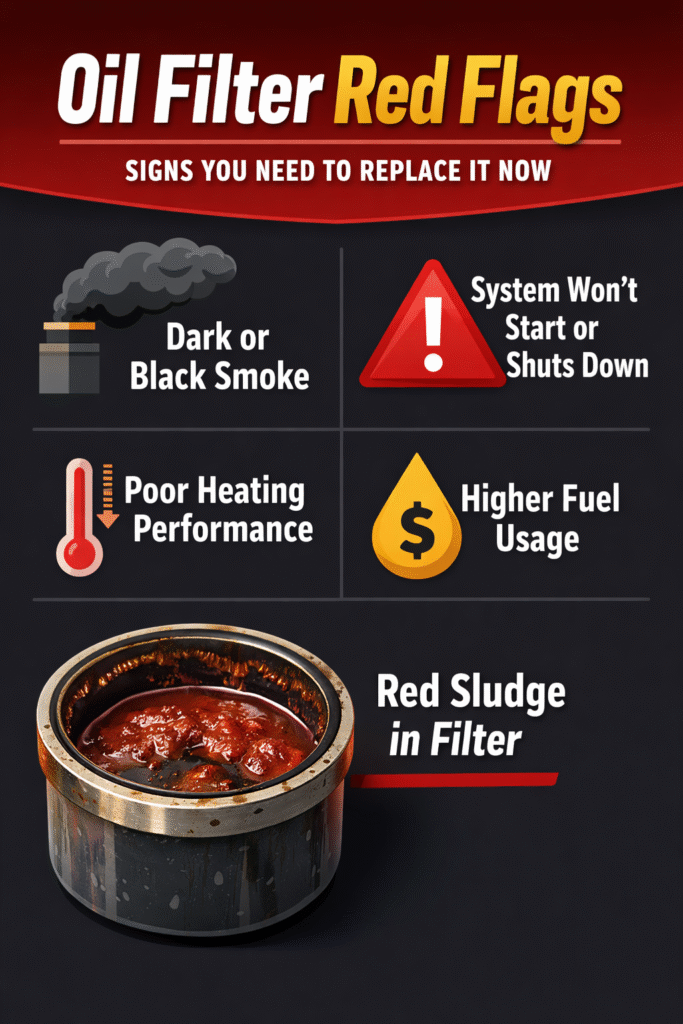
  1. Dark or black smoke coming from the chimney is a major red flag. Normal exhaust is light in color; darker smoke often indicates moisture or debris making it past a clogged filter.
  2. If your heating system won’t start, shuts down unexpectedly, or goes into lockout mode, restricted oil flow from a clogged filter is often the cause. Poor heating performance—such as slow warm-ups, uneven heat, or frequent burner cycling—can also point to filter issues.
  3. Reduced oil flow is another clear warning sign. If the burner runs longer than usual without delivering adequate heat, or fuel usage increases without improved comfort, the filter may be restricting supply.
  4. Red sludge inside the filter canister signals water contamination. This requires immediate replacement and may indicate moisture issues in the tank. 

Even without symptoms, if it’s been over a year since the last change, replacement is due.

Benefits of Regular Heating Oil Filter Replacement

Replacing your heating oil filter on schedule delivers tangible benefits.

  • Consistent, reliable heat: A clean filter allows steady oil flow to the burner, helping your system deliver even heat throughout the winter.
  • Improved efficiency and lower costs: Clean oil burns more efficiently, reducing fuel waste, lowering heating costs, and minimizing emissions.
  • Longer equipment life: Regular filter changes reduce strain on burner components, protect the fuel pump, and help prevent nozzle clogs.
  • Fewer emergency repairs: Preventive replacement helps avoid costly service calls. Filters are inexpensive compared to repairs caused by restricted fuel flow, which can reach hundreds or even thousands of dollars.
  • Cleaner operation and better air quality: Efficient combustion produces less soot, reducing residue buildup in your system and supporting better indoor air quality.

DIY vs. Professional Filter Replacement

Some homeowners choose to replace their heating oil filter themselves, while others prefer professional service.

DIY replacement is possible if you’re comfortable with basic tools and safety steps. It typically requires a wrench, drip pan, gloves, and a replacement filter cartridge. The process involves shutting off power and the oil supply, removing the filter canister, replacing the cartridge, and reassembling the unit.

However, mistakes can lead to oil spills, air entering the fuel line, or improper installation. If you’re unsure at any step, professional service is the safer option.

Professional replacement is recommended for most homeowners. Technicians replace the filter as part of a full annual tune-up, ensuring proper installation and checking the system for other potential issues. Professional service typically costs between $75 and $150 and offers peace of mind during peak heating season.

What Happens During Professional Annual Maintenance

During a professional heating system service visit, technicians typically replace the oil filter, clean and adjust the burner, inspect or replace the nozzle, clean the heat exchanger, and test safety controls.

They also inspect the chimney or flue, test system efficiency, and identify early signs of wear or malfunction. This comprehensive approach helps ensure safe, efficient operation throughout winter.

How to Make Filter Replacement Easy to Remember

The easiest way to stay on schedule is to set an annual reminder for early fall. Coordinating filter replacement with your furnace tune-up makes it a one-step process.

Keeping a spare filter on hand and documenting the last replacement date can also help. 

Additionally, monitoring your system with tools like the Smart Oil Gauge can alert you to unusual performance or usage patterns that may signal maintenance needs.

What You Should Do

Replacing your heating oil filter once per year—preferably in the fall—is a simple, affordable form of preventive maintenance. It helps avoid system shutdowns, improves efficiency, and protects your heating equipment from costly damage.

If you notice warning signs like dark smoke, poor performance, or unexpected shutdowns, don’t wait. Addressing filter issues early keeps your home warm and your system reliable. For dependable heating oil delivery, monitoring tools, and support throughout the heating season, contact DollarWise before winter demand peaks.

Frequently Asked Questions About Heating Oil

How often should I replace my heating oil filter?
At least once per year. Homes with older tanks, high usage, or biodiesel blends may benefit from more frequent replacement.

What are the signs of a clogged heating oil filter?
Dark smoke, system shutdowns, poor heating performance, increased fuel usage, and red sludge in the filter canister are common indicators. Additional system safety guidance can be found in DollarWise’s Safety Tips for Home Heating Oil Systems.

Can I change my heating oil filter myself?
Yes, if you’re comfortable with basic tools and safety procedures. However, professional service is recommended to avoid spills and installation errors.

How much does oil filter replacement cost?
DIY replacement typically costs $15–$50 for parts. Professional replacement usually costs $75–$150 and is often included in annual maintenance.

What happens if I don’t change my filter?
A clogged filter can restrict oil flow, cause system lockouts, reduce efficiency, and lead to expensive repairs—especially during peak winter demand.

When is the best time of year to replace my filter?
Early fall, before the heating season begins.

What’s the difference between a furnace filter and an oil tank filter?
A furnace filter cleans air moving through your home. An oil tank filter cleans fuel before it reaches the burner. They serve different purposes and require separate maintenance.

How do I know if my filter needs changing between annual replacements?
Unexpected shutdowns, reduced heat output, smoke, or rising fuel consumption are signs that replacement may be needed sooner. If a runout does occur, see What You Should Do If You Run Out of Heating Oil for next steps.

When Do I Need to Replace My Heating Oil Tank Filter?

When Do I Need to Replace My Heating Oil Tank Filter? Your heating oil filter doesn’t get much attention, but it plays a critical role in keeping your furnace or boiler running reliably. A clogged or overdue filter can restrict oil flow, trigger system shutdowns, and lead to expensive mid-winter service calls. If you’re wondering how often to replace your


Read More
home heating safety tips, family holding a home

Heating Oil Safety Tips: What Every Homeowner Should Know

Heating Oil Safety Tips: What Every Homeowner Should Know Want to keep your home safe when using heating oil? If you heat your home with oil, a strange smell, a concern about your tank, or just wanting to make sure everything is working the way, we break down our top safety tips in this guide. The good news is that

Read More

Heating Oil Uses & What You Shouldn’t Use It For

Heating Oil Uses & What You Shouldn’t Use It For Heating oil has long been one of the most reliable ways to heat homes across the Northeast. Still, many homeowners aren’t entirely sure what heating oil is designed for — or where using it can become unsafe, illegal, or damaging to equipment. Whether you’re preparing for winter, comparing fuel options,

Read More
Enable Push Notifications OK No thanks