Dollarwise

Heating Oil Uses & What You Shouldn't Use It For

What Is Heating Oil?

Heating oil is a refined petroleum product designed for furnaces, boilers, and water heaters. It’s similar to diesel fuel but made for residential and commercial systems, not vehicles. When burned, it creates steady, high-temperature heat that keeps homes and businesses warm throughout the colder months.

How Heating Oil Works

Heating oil is stored in a tank, usually outdoors, underground, or in a basement. When your thermostat calls for heat, the burner draws oil from the tank, sprays it as a mist, mixes it with air, and ignites it inside the combustion chamber. The heat produced warms either air (in forced-air systems) or water (in hydronic systems), which is then circulated through your home.

This process is simple, effective, and reliable, which is why oil heating systems are common in many parts of the Northeast.

Primary Heating Oil Uses

Most heating oil uses fall into a few main categories. These include:

  • Home Heating: Furnaces and boilers that rely on heating oil provide steady, even warmth and are built to last.

  • Water Heating: Oil-fired water heaters supply dependable hot water all year.

  • Commercial Heating: Schools, offices, and industrial buildings often rely on heating oil for space heating.

  • Backup Power: Some facilities use heating oil (No. 2 fuel oil) to power large backup generators during outages.

If you’ve ever wondered what is heating oil used for, the answer is simple: it’s a versatile fuel for keeping homes, businesses, and facilities comfortably warm.

Advantages of Heating Oil

Heating oil has a strong reputation for performance, safety, and comfort.

  • High Efficiency: Modern oil furnaces can achieve efficiency ratings above 90 percent.

  • Safe and Stable: Heating oil does not explode at room temperature and only ignites under controlled conditions inside the burner.

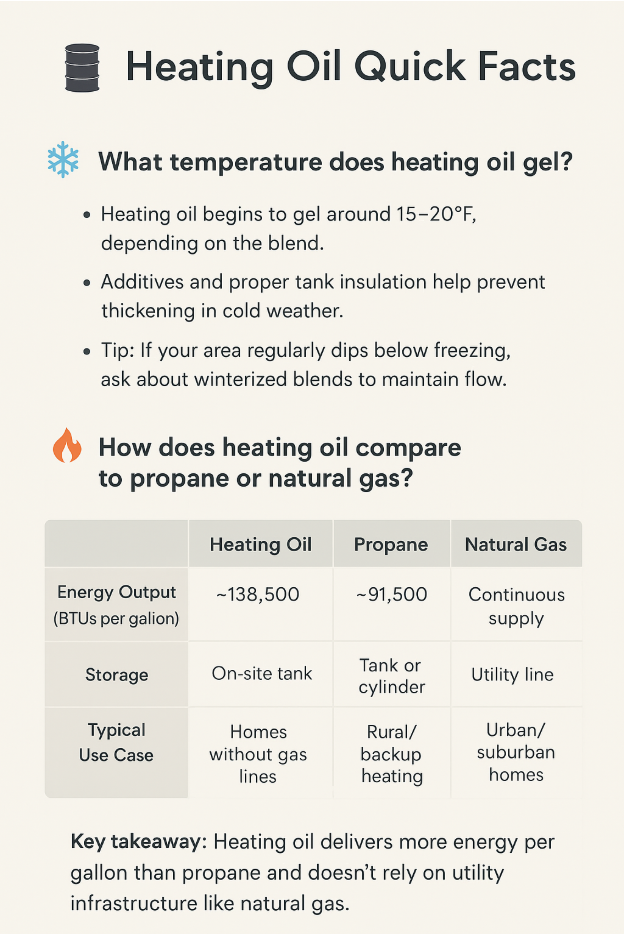
  • Energy Dense: One gallon produces about 138,500 BTUs, which is more heat per gallon than propane or natural gas.

  • Independent Supply: Having a tank on your property gives you control over your own heating supply instead of relying on a utility line.

Read more about saving money on heating oil in our Heating Oil Cost-Saving Tips & Tricks guide.

Heating Oil vs. Other Fuels

Fuel Type Efficiency Safety Cost Control Availability
Heating Oil High (up to 95%) Very Safe (non-explosive) High (stored on-site) Common in the Northeast
Propane Moderate Safe Varies by supplier Widely available
Natural Gas High Safe Fixed utility pricing Limited to pipeline areas
Electric Variable Safe Subject to rate hikes Available everywhere

Heating oil delivers high heat output, strong efficiency, and reliable comfort, especially in colder climates.

What You Should Not Use Heating Oil For

Heating oil is meant for specific systems. Using it incorrectly can be unsafe, cause equipment damage, or lead to fines. Avoid using heating oil for:

  • Vehicles or Trucks: Heating oil and diesel are similar, but heating oil is dyed red to show it’s untaxed for road use. Using it in vehicles is illegal.

  • Cooking or Indoor Lighting: Never use heating oil in stoves or lamps. It produces harmful fumes and is not made for those uses.

  • Mixing with Other Fuels: Do not mix heating oil with gasoline or any other type of fuel. The mixture can damage equipment and create safety risks.

  • Portable Generators: Only large, stationary generators that are specifically rated for No. 2 fuel oil can use heating oil safely.

Heating oil is for furnaces, boilers, and certain water heaters, nothing else.

Legal and Regulatory Overview

Heating oil is dyed red to indicate that it’s untaxed and approved for off-road use only. This red dye allows regulators to easily identify whether the fuel has been misused in on-road vehicles, which are subject to highway fuel taxes. Using red-dyed heating oil in a licensed vehicle is considered tax evasion under federal law and can result in steep fines.

Homeowners don’t need to worry about this for normal residential or commercial heating. Just make sure your fuel supplier provides properly labeled heating oil that complies with local and federal regulations.

Storage and Handling Best Practices

Proper storage and care extend the life of your heating oil and help keep your system in top condition.

  • Use a Quality Tank: Choose a corrosion-resistant steel or double-walled tank.


  • Inspect Regularly: Check for leaks, rust, or sludge buildup before each heating season.


  • Add Filters and Separators: A good filtration system keeps contaminants out of your burner.


  • Keep the Tank Full: Less air inside reduces condensation and prevents sludge from forming.


  • Prevent Gelling: In very cold areas, use anti-gel additives or insulate exposed fuel lines.

For more safety information, visit our Safety Tips for Home Heating Oil Systems.

Frequently Asked Questions

How long does heating oil last?

If stored properly, heating oil can last 18 to 24 months before it begins to break down. Using a stabilizer can help extend its shelf life.

Is heating oil safe?

Yes. Heating oil is one of the safest energy sources for home heating. It is non-flammable in liquid form and only burns under the high temperatures created inside your furnace.

What’s the difference between heating oil and diesel?

They are chemically similar. The main difference is that heating oil is dyed red and untaxed, while diesel is clear and taxed for highway use. Using heating oil in vehicles is illegal under federal and state law.

At what temperature does heating oil gel?

Heating oil begins to gel at about 15 to 20 degrees Fahrenheit. In very cold weather, the wax molecules in the fuel thicken, which can clog filters and fuel lines. Anti-gel additives and tank insulation can help prevent this.

Is heating oil better than propane or natural gas?

Heating oil systems often produce higher heat output per gallon than propane or natural gas. While gas systems can be convenient in areas with pipelines, heating oil gives homeowners more control over their fuel supply and costs.

Why Heating Oil’s the Best Solution

Heating oil remains one of the most efficient, dependable, and safe options for oil for heating homes. It also provides flexibility and comfort for both residential and commercial use. With proper storage and care, oil for heating systems can last for decades.

Order affordable heating oil delivery from Dollarwise today and stay warm all season long.

Can You Use Alternatives for Heating Oil?

Can You Use Alternatives for Heating Oil? If you rely on heating oil to keep your home warm, running out can be stressful, especially in the middle of winter. Fortunately, there are several heating oil alternatives that can help you stay comfortable when your supply runs low.  This guide covers practical options, how they compare to heating oil, and what

Read More

How to Calculate Your Heating Oil Usage

How to Calculate Your Heating Oil Usage Are your home heating bills outrageously high these days? We can’t control heating oil prices, but with costs climbing for just about everything, most homeowners are looking to avoid unnecessary expenses these days. Fortunately, understanding your heating oil usage, whether with a heating oil usage calculator or by tracking your tank manually, can

Read More

Differences of Using Heating Oil vs Propane

Differences of Using Heating Oil vs Propane When it comes to heating your home, choosing the right fuel is a major decision. Heating oil and propane are two of the most common options for homes not connected to natural gas lines, but each comes with its own costs and considerations. Understanding the differences can help you make the best choice

Read More
Enable Push Notifications OK No thanks